
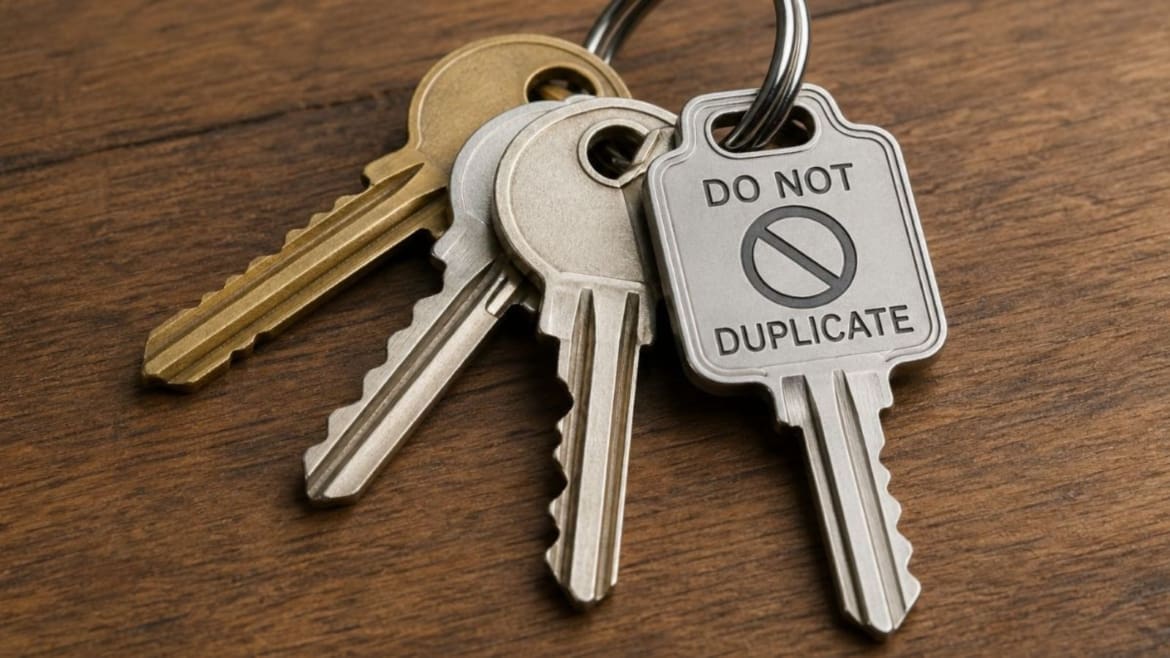
When you’re handed a key stamped with “Do Not Duplicate,” it often creates a sense of reassurance. The wording sounds official and gives the impression that no one else can make a copy without permission. For homeowners, landlords, and business owners, that message can feel like an added layer of security.
In reality, the situation is more complicated. A “Do Not Duplicate” stamp does not always prevent a key from being copied, and understanding the difference between a warning label and true access control is important if you want better security for your property.
What “Do Not Duplicate” Actually Means
The phrase “Do Not Duplicate” is usually a request rather than a built-in security feature. It is commonly added by locksmiths or manufacturers to discourage unauthorized copying.
In most cases, the key itself still works like a standard key. If the matching key blank is available, many hardware stores, kiosks, or locksmiths may still be able to create a duplicate.
The stamp does not physically prevent the copying process. Instead, it depends on whether the person making the copy chooses to honor the request.
Because of this, many people assume these keys provide stronger protection than they actually do.
Why Standard “Do Not Duplicate” Keys Can Still Be Copied
Most standard residential and commercial keys use common keyways that are widely available. Key duplication machines simply trace the cuts and grooves of the original key.
The machine does not recognize or enforce the wording stamped on the key.
If someone has temporary access to the key and the proper blank is easy to obtain, a duplicate can often be made without much difficulty.
This creates a common misunderstanding:
- The stamp suggests restricted access
- The actual key system may still allow unrestricted duplication
Without additional security features, the wording alone provides very little real control.
When “Do Not Duplicate” Keys Offer Better Protection
Not all key systems work the same way. Some advanced systems include actual duplication restrictions built into the design.
Restricted Key Systems
Restricted key systems use patented or controlled keyways that limit who can make copies. In these systems:
- Key blanks are not sold publicly
- Duplication usually requires authorization
- Copies can only be made through approved locksmith providers
This creates real control over how many keys exist and who can access them.
Patented Keyways
Some manufacturers patent their key designs, making it difficult for unauthorized shops to legally obtain the correct blanks.
Even if someone wants to duplicate the key, access to the proper blank may not be available.
This is very different from a standard key that simply has a warning stamped onto it.
Why Key Control Matters for Property Security
The biggest issue with standard “Do Not Duplicate” keys is uncertainty.
Property owners often do not know:
- How many copies exist
- Who may still have access
- Whether duplicates were made years earlier
This becomes especially important in:
- Rental properties
- Apartment complexes
- Commercial buildings
- Homes with previous owners or contractors
Even if you trust current occupants, older duplicates may still be circulating without your knowledge.
Over time, this weakens overall access control and creates unnecessary security risks.
Better Alternatives for Stronger Access Control
Rekeying Existing Locks
Rekeying changes the internal lock pins so old keys no longer work. This is one of the simplest ways to regain control after moving, tenant turnover, or lost keys.
Restricted Key Systems
Restricted systems provide stronger duplication control and are commonly used for businesses, multi-unit properties, and higher-security homes.
Master Key Systems
Master key systems allow different users to access specific areas while giving owners or managers broader access control.
For example:
- Tenants use individual keys
- Property managers use master keys
- Maintenance staff may receive limited access keys
This structure improves organization while maintaining security.
Electronic Access Systems
Some homeowners and businesses now combine traditional locks with keypad, card access, or smart lock systems to reduce dependence on physical key copies altogether.
Signs It May Be Time To Upgrade Your Key System
Many property owners continue using older lock systems long after security needs have changed.
You may want to upgrade if:
- Multiple people have had access to your keys over time
- You manage rental or commercial properties
- Keys have been lost or unreturned
- You are unsure how many duplicates exist
- You want better control over future duplication
A locksmith can help evaluate whether your current system still matches your security needs.
The Real Difference Between a Warning and Real Security
A “Do Not Duplicate” stamp may discourage casual copying, but it does not physically stop someone from making a duplicate in many situations.
Real key security comes from:
- Controlled keyways
- Restricted duplication systems
- Rekeying practices
- Structured access management
The wording on the key matters far less than the security system behind it.
Carl Jarl Locksmiths | Home Security Systems Omaha, NE
Carl Jarl Locksmiths can secure your business with panic bars, exit locks, card access systems, and more. We guarantee our locks and offer 24/7 service to keep your business safe at all times.
Always use the services of a trusted local Locksmith/Home Security Company. Carl Jarl Locksmiths offers products and services to make your home safe and secure. Your Security is our top priority.
- We are licensed, bonded, and insured
- Provide an immediate response
- We have a 24-hour locksmith dispatch center
- All our employees are background checked, wear uniforms, and arrive in our identifiable service vehicles
Choose experience and peace of mind. Carl Jarl Locksmith’s prompt and dependable Locksmith Service is just a phone call away.

